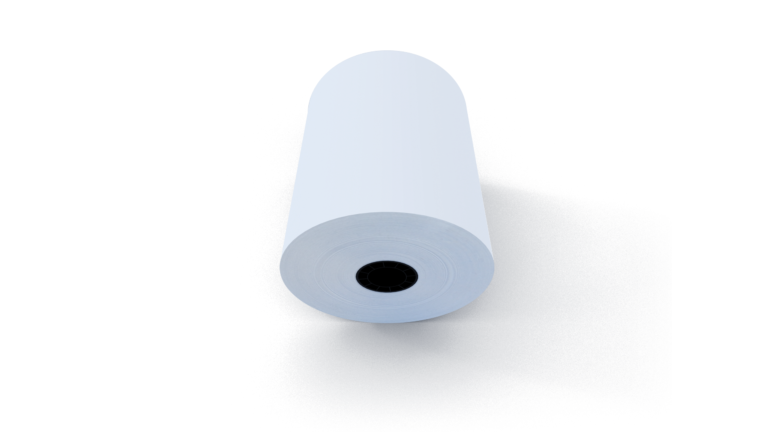
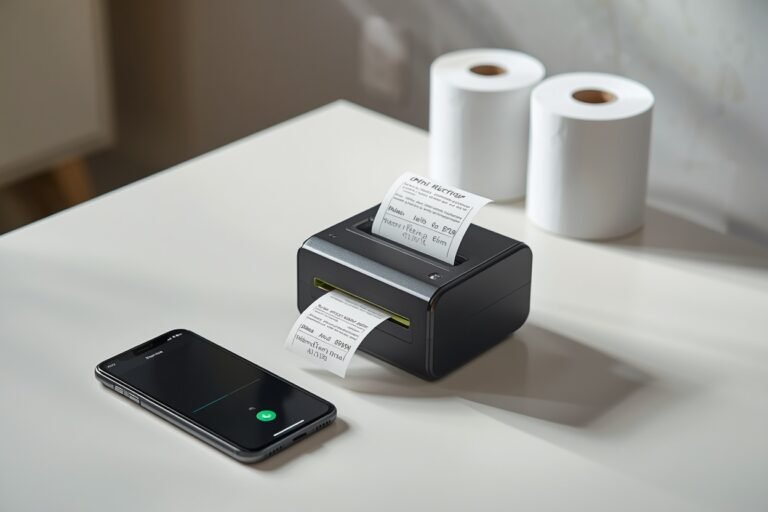
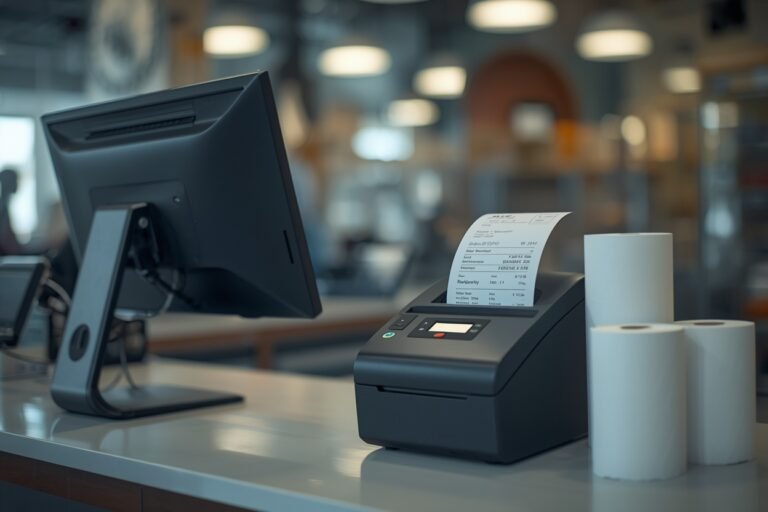
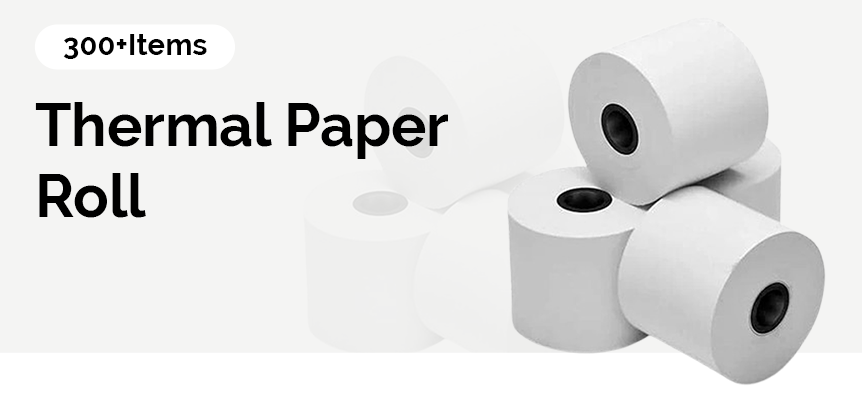
The majority of individuals watch a receipt print within a few seconds, and they do not even ask themselves how it is possible. No clicking away and on again of an ink head. You do not smell of the acuity of wet chemicals and toner. Rather than being a printing process, it is an unspoken heat-driven process to print a blank surface into readable text. The technology employs the use of a special thermal printer roll to perform magic. The most significant element of the whole printing system is the actual paper. It has all the chemicals needed in its starkly thin top.
The normal sheet of a Roll of Thermal Paper
An average sheet of thermal paper appears like a normal one to the naked eye. But in reality, it is made out of a number of microscopic layers layered over one another. The paper or synthetic film beneath is normally of good quality. A pre-coat layer is placed on top of this base to ensure that the heat is concentrated. This does not allow the heat to become absorbed in the depth of the paper fibers. The most essential one is the active thermal layer, which is directly on the surface.
The direction of the Reaction by the Thermal Print Head
The device inside your device is the brain, the thermal print head. This part is composed of thousands of heating components forming a row. The elements all are all less than a grain of salt and may heat up within milliseconds. Depending on the text or image, the printer directs the electric impulses to particular elements. These are directly against the thermal paper roll as it rotates. The paper flows evenly over the head, forming a continuous stream of data.
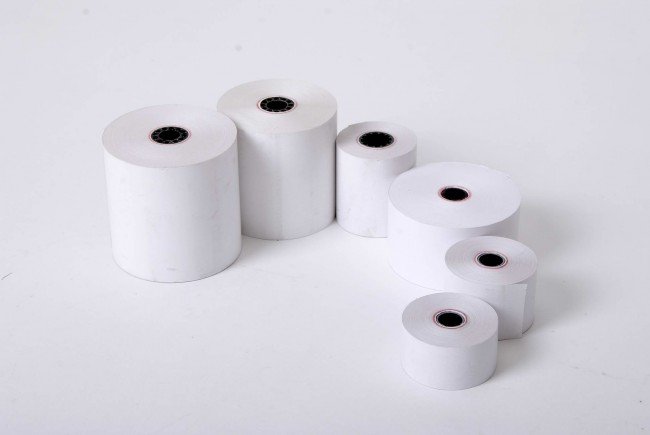
The Complicated Thermal Paper Rolls Production
Production of such specialized rolls takes a lot of technical skills. The thermal paper rolls manufacturing process begins with the selection of the base stock. The chemical coating is then rolled onto the manufacturers using high-precision rollers at a factory. They should make the coating as smooth as possible all around the width of the paper. Any thin areas in the layering of the chemistry would lead to gaps in the printing of the text. The surroundings should be highly regulated to avoid heat exposure through accident.
Why Thermal Printing Remains the Business of the Day
The main factor that has made thermal technology conquer the retail world is speed. It requires a thermal printer roll to print a long receipt within a short period of less than one second. Another significant factor, which predisposes to the use of Thermal Paper Rolls, is cost. The paper is a little more expensive than plain bond paper, which you can save on ink. The cost of the ink and toners is among the most costly liquids on earth. When they are eliminated from the equation, the overall cost of ownership is reduced dramatically.
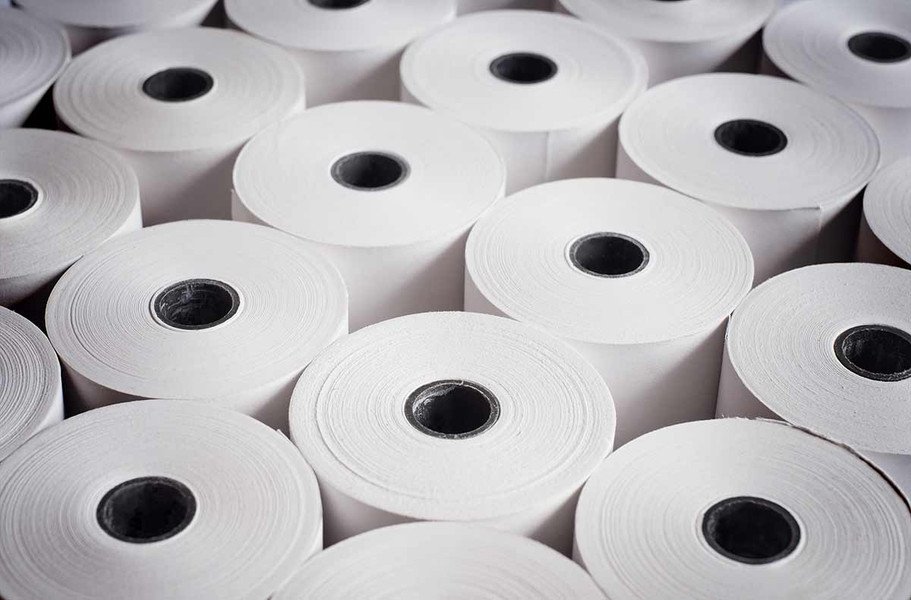
Thermal Paper Rolls Technology
The global thermal printing innovation is based on sustainability and safety. Scientists are coming up with alternative chemical formulas that are not dependent on the traditional developers. Other fresh papers modify colour by a chemical process, but with the help of a physical procedure. Such developments facilitate the recycling of the paper, too, with the normal waste. The costs are getting reduced by faster coating machines and improved drying techniques. There is an increase in the use of portable thermal printers in logistics and delivery operations.
Also Check our Facebook page for more information.
FAQs
What was wrong with my receipt?
It got all black? Most probably, the paper was under extreme heat that caused a reaction of all the chemicals simultaneously.
Is it possible to use standard paper in a thermal printer?
No plain paper has a chemical covering to be responsive to the heat.
How can a roll of thermal paper be stored?
Your rolls are to be kept in a dark and cool area to avoid deterioration of the chemicals.
On which side of the paper is the coated side?
Draw a line in the paper with your fingernail, and the part that shows dark is covered.
What makes thermal printing so quieter compared to others?
It has fewer moving components, and it is not based on mechanical impact to convey images.